Regenerative pedology · Soil microbiology · Biogenic carbon retention

The science behind Davis Ag Terra Preta: from humic horizons to durable carbon storage.

A 24-month formulation that combines the microporous matrix of biochar, slow-release humic and fulvic fractions, and vermicompost biology — a living alternative to fertility built on synthetic inputs alone.

Lignin breakdown, fungal networks & organic acids

Why fast compost struggles to build lasting soil structure.

Most commercial compost is pushed through a few weeks of intense heat to finish quickly. Davis Ag also starts with a warm, bacteria-driven phase, but then gives the material time: a long, cooler stretch where fungi and, later, earthworms do the slow work of building humus.

Rapid commercial compostDavis Ag Terra Preta
TimelineWeeks to a few months24 months
Heat profileSustained high-temperature peaks to finish fastA warm thermophilic start, then a long, cooler curing phase
Main decomposersHeat-loving bacteriaBacteria, then wood-decay fungi, then a full year of earthworms
Base materialMunicipal green and food wasteAged forest humus and rotted wood, plus biochar, manure and food waste
CarbonA large share of the carbon leaves quickly as CO₂More carbon kept as humic substances and stable biochar
1.1

White-rot fungal decomposition

Aged forest material is colonized by native white-rot fungi, the main organisms able to break down lignin, the toughest part of wood. They use oxidative enzymes such as lignin peroxidases, manganese peroxidases and laccases, releasing fragments that feed the formation of complex humic molecules.

1.2

Humic & fulvic fractions

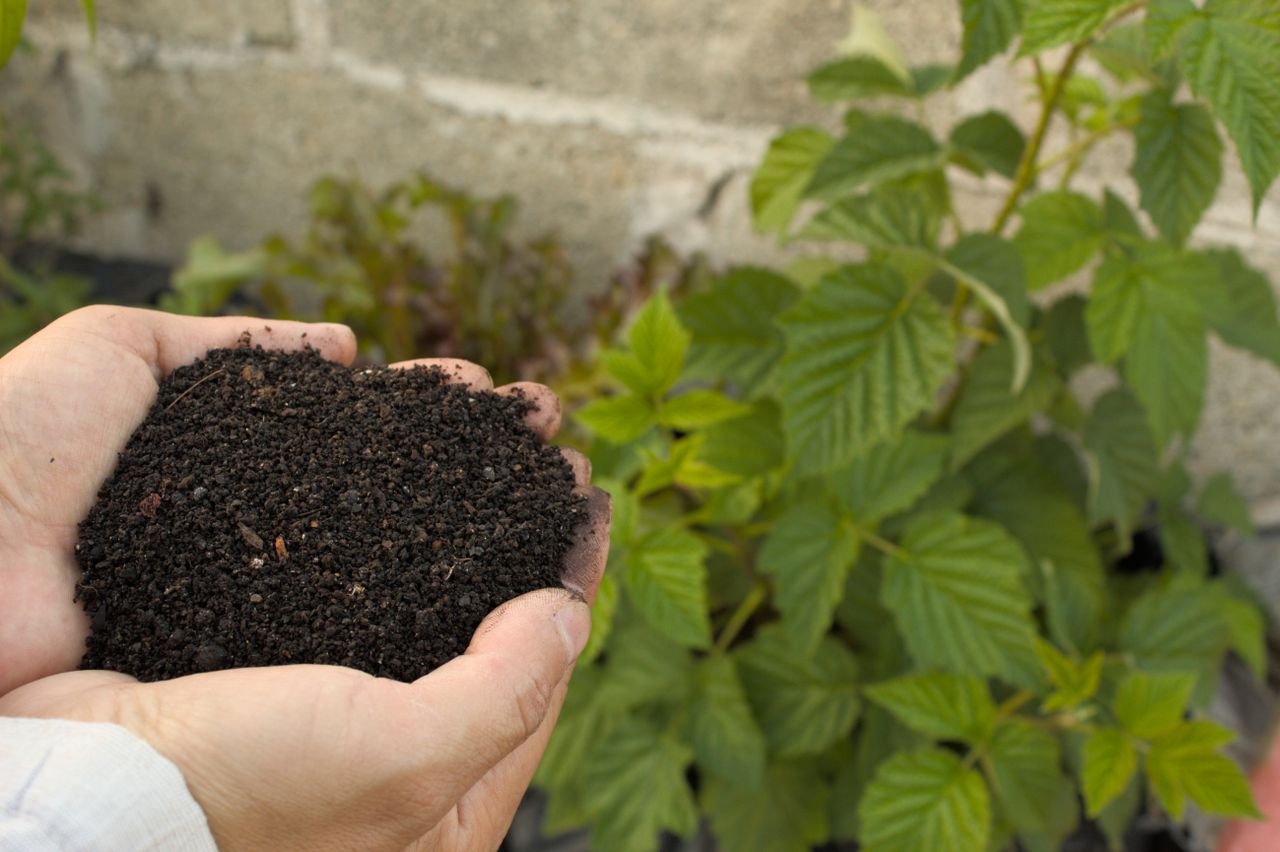
Humic and fulvic acids act as natural chelators: they bind micronutrients such as Fe³⁺ and Zn²⁺, keeping them soluble and available near the roots, and they can improve phosphorus availability — without synthetic chelating agents.

1.3

Fungal priming before the worms arrive

The long curing phase lets fungal hyphae spread through the woody matrix. By the time earthworms are introduced, the substrate is already a pre-digested, biologically active food source.

Layers of decomposing leaves and wood on a forest floor
Forest floor: the natural model for the humic horizon.
Surface chemistry & cation retention

Biochar is not plant food. It is the living matrix and nutrient reservoir.

This is the core lesson of Amazonian Terra Preta, where charcoal-rich soils still hold far more stable carbon than the land around them, centuries later.

COO⁻COO⁻COO⁻ COO⁻COO⁻OH Ca²⁺ K⁺ Mg²⁺ NH₄⁺ K⁺ pore refuge microbes
Schematic, not to scale. Negative surface sites hold nutrient cations; pores shelter microbes.
Cation exchange capacity

A charged surface that holds nutrients

In contact with moisture and biology, the edges of biochar's aromatic rings slowly oxidize, forming negatively charged carboxyl (–COOH) and phenolic (–OH) groups. These sites hold mobile nutrient cations:

Surface–COO⁻ ··· Ca²⁺, Mg²⁺, K⁺, NH₄⁺

That reduces leaching below the root zone under heavy rain or irrigation.

Pore topology & microbial refugia

Shelter for soil life

Biochar's internal surface area ranges from tens to several hundred m²/g, depending on the feedstock and production temperature. Its larger pores, in the micrometre range, give bacteria and fungal hyphae shelter from drying out and from predators; its fine pores hold water.

Values from published literature [1]; not a measurement of this product.
Recalcitrance

A carbon lattice built to last

Condensed aromatic carbon resists microbial and enzymatic breakdown. Studies of Terra Preta show this charcoal persisting for centuries, which keeps its water-holding pores and nutrient sites working in the soil for the long term.

Glaser et al. 2001 [2]; Lehmann & Joseph 2015 [1].
Biological transformation via Eisenia fetida

Twelve full months of earthworm refinement.

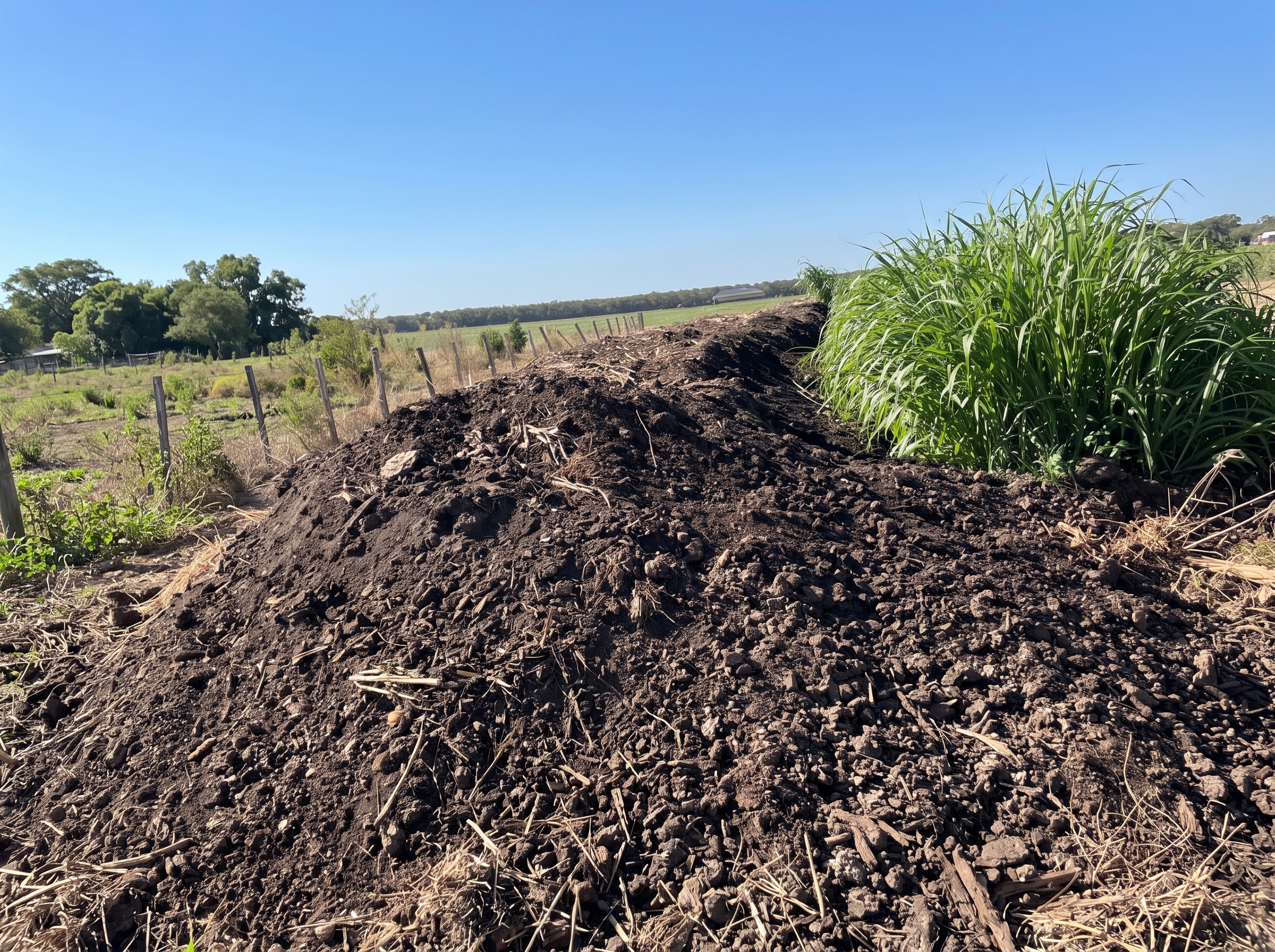
Months 13 to 24 belong to the red wiggler. Living under a cover crop, the worms keep digesting the cured material, turning it into castings with structure and biology that bulk compost rarely reaches.

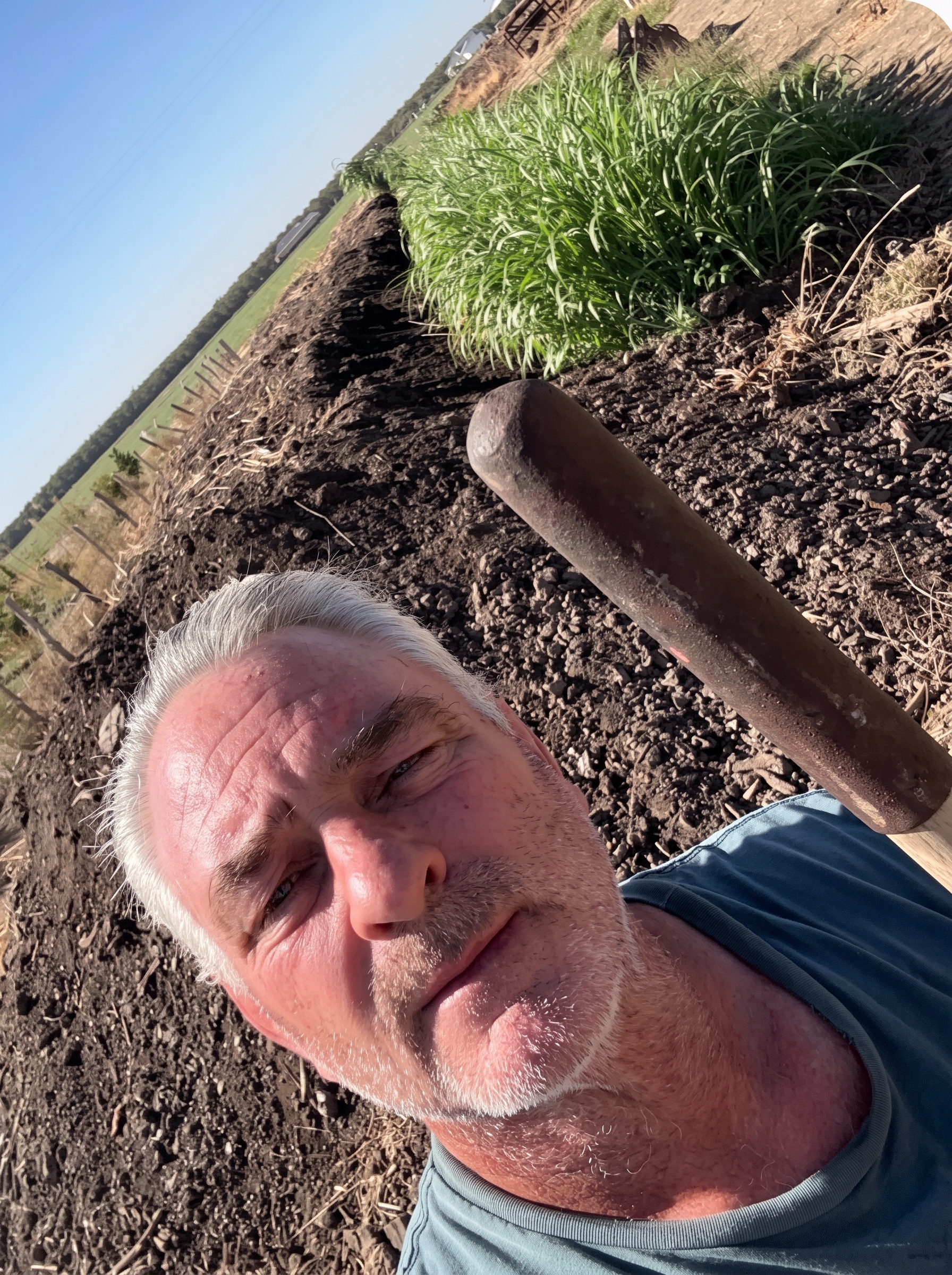
Jack Davis in front of the Terra Preta worm bedding Worm casting bed establishing cover crops
"The cover crops are established in phases on the worm bedding." — Jack Davis

Castings vs. bulk soil

As organic fragments pass through the worm's gut, they are mixed with mucus and microbes and with calcium carbonate from the worm's calciferous glands. The result helps buffer pH and leaves water-stable micro-aggregates — the crumb structure growers feel in their hands.

Plant-growth regulators

Research on vermicompost has detected plant-hormone activity from three groups:

Auxinsincl. indole-3-acetic acid (IAA) — root initiation
Cytokininscell division and shoot growth
Gibberellinsgermination and elongation

Vermicomposts have also been linked to suppression of some plant pests and diseases [4].

Protective living cover

Cover crops planted directly on the worm windrows shade the colonies from UV and California heat, hold moisture, and feed the soil food web with root exudates such as sugars and amino acids.

Direct greenhouse gas mitigation

Measurable mechanisms for durable, long-horizon carbon storage.

~28×

Methane's warming power

Over 100 years, methane (CH₄) traps about 28 times more heat than CO₂. Landfills are the third-largest source of methane in the U.S. Composting wood and food waste in aerobic, biologically managed windrows avoids landfill methane.

Source: U.S. EPA [6]
~50%

Carbon kept as biochar

Converting wood to biochar retains roughly half of its original carbon in stable aromatic form. Left to rot or burned, nearly all of it returns to the atmosphere.

Woolf et al. 2010 [3]; Lehmann & Joseph 2015 [1]
100s

Years of residence

The charcoal in Amazonian dark earths has persisted for centuries, with up to 70 times more black carbon than surrounding soils.

Glaser et al. 2001 [2]

Stable vs. labile carbon.

Fresh organic matter is "labile": microbes respire most of its carbon back to the air within years to decades. Carbon converted into biochar becomes part of the stable pool, measured in centuries. In Jack's kilns, the smoke and gases released during charring are recirculated into a hood that acts as a combustion chamber and burned again, instead of escaping as smoke.

Davis Ag biochar harvesters #2 and #3 running next to an air curtain burner.
Wood left to decomposeillustrative
Wood converted to biochar~50% retained [3]
Stable carbon (centuries) Respired back to air Released as process gas / heat

Illustrative proportions for comparison; actual values vary by feedstock and conditions.

How biochar stability is assessed

The International Biochar Initiative and the European Biochar Certificate use the molar H/Corg ratio as a stability indicator, with values at or below 0.7 indicating highly condensed, durable carbon. Lab analysis of each production batch is the way to confirm it.

Water where the roots are

Biochar's porosity and humus's sponge-like structure help soil hold more plant-available water. Bagri Produce reports that the amendment has helped its soil control irrigation water better — a benefit that matters in California's dry seasons.

Published agronomic literature

Grounded in decades of soil physics, chemistry and microbiology research.

  1. Lehmann, J. & Joseph, S. (eds.) (2015). Biochar for Environmental Management: Science, Technology and Implementation (2nd ed.). Routledge / Earthscan.

    FocusNutrient retention mechanics, pore structure and long-term persistence of biochar in soils.

  2. Glaser, B., Haumaier, L., Guggenberger, G. & Zech, W. (2001). The 'Terra Preta' phenomenon: a model for sustainable agriculture in the humid tropics. Naturwissenschaften, 88(1), 37–41. doi:10.1007/s001140000193

    FocusPersistent fertility, black carbon content and nutrient-holding capacity of Amazonian dark earths.

  3. Woolf, D., Amonette, J. E., Street-Perrott, F. A., Lehmann, J. & Joseph, S. (2010). Sustainable biochar to mitigate global climate change. Nature Communications, 1, 56. doi:10.1038/ncomms1053

    FocusLife-cycle assessment of biochar's potential to mitigate greenhouse gas emissions.

  4. Edwards, C. A. & Arancon, N. Q. (2004). Vermicomposts suppress plant pest and disease attacks. BioCycle, 45(3), 51–53. biocycle.net

    FocusEarthworm-derived humic substances and plant-growth regulators; pest and disease suppression.

  5. Jeffery, S., Abalos, D., Prodana, M., Bastos, A. C., van Groenigen, J. W., Hungate, B. A. & Verheijen, F. (2017). Biochar boosts tropical but not temperate crop yields. Environmental Research Letters, 12(5). doi:10.1088/1748-9326/aa67bd

    FocusWhy biochar alone gives limited yield gains in temperate soils — and why biology matters.

  6. U.S. Environmental Protection Agency. Methane emissions. epa.gov/ghgemissions/methane-emissions

    FocusMethane's 100-year global warming potential and landfill emissions in the U.S.

Figures on this page describe mechanisms reported in published research. They are not measurements of Davis Ag Terra Preta. For product-specific information, contact the technical team.

Technical consultation

Validate the biological difference in your own field trials.

Talk with the team about your soil, your crops and how Davis Ag Terra Preta could fit your operation.