01
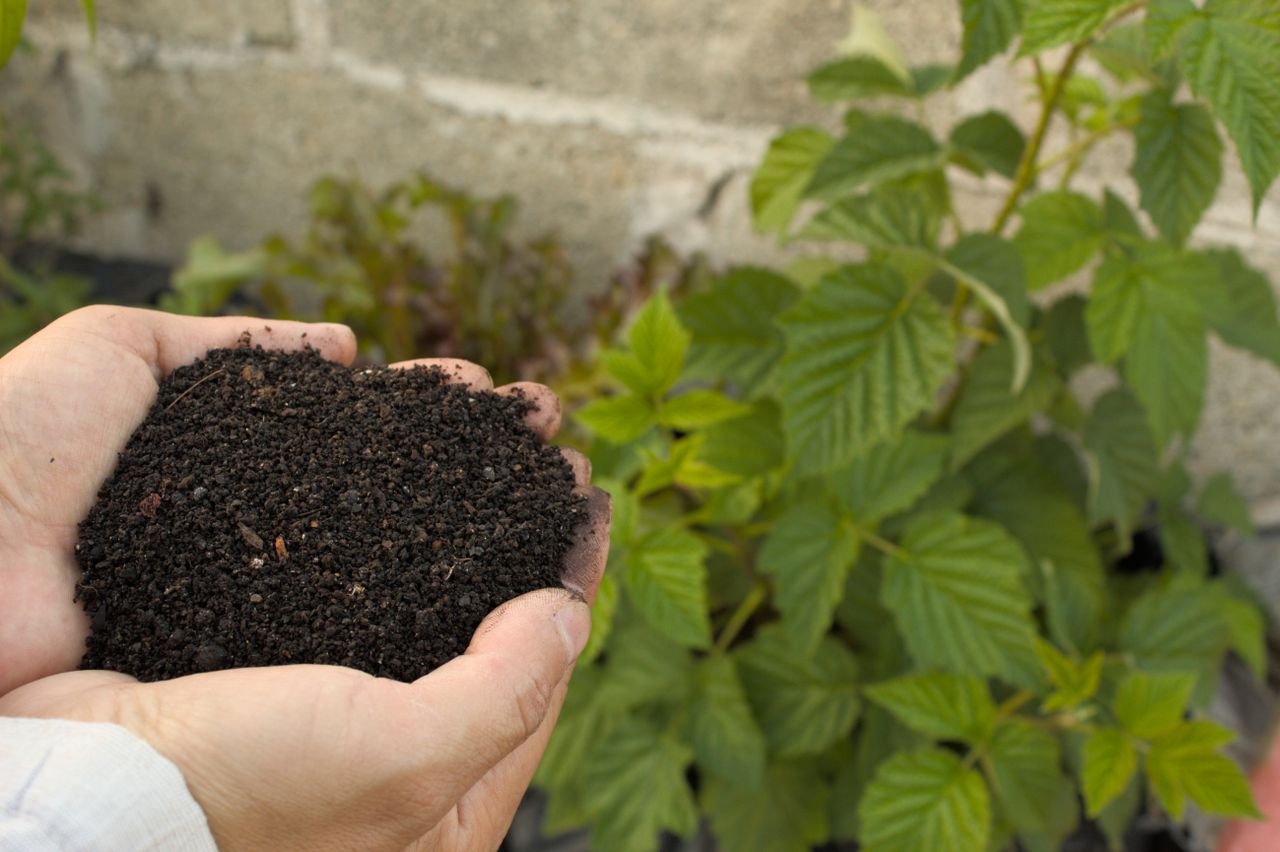
Genuine aged forest humus
Unlike accelerated commercial substrates, our foundation starts with forest biomass aged naturally for decades — rich in native fungal networks and essential humic and fulvic acids.
Davis Ag unites naturally aged forest humus, high-porosity biochar and intensive vermicomposting to rebuild soil structure, maximize root vitality and lock carbon into the ground.
Unlike accelerated commercial substrates, our foundation starts with forest biomass aged naturally for decades — rich in native fungal networks and essential humic and fulvic acids.
The microporous lattice of biochar captures and holds soluble minerals (Ca²⁺, Mg²⁺, K⁺), limiting nutrient leaching under heavy irrigation while giving beneficial microbes a protected sanctuary.
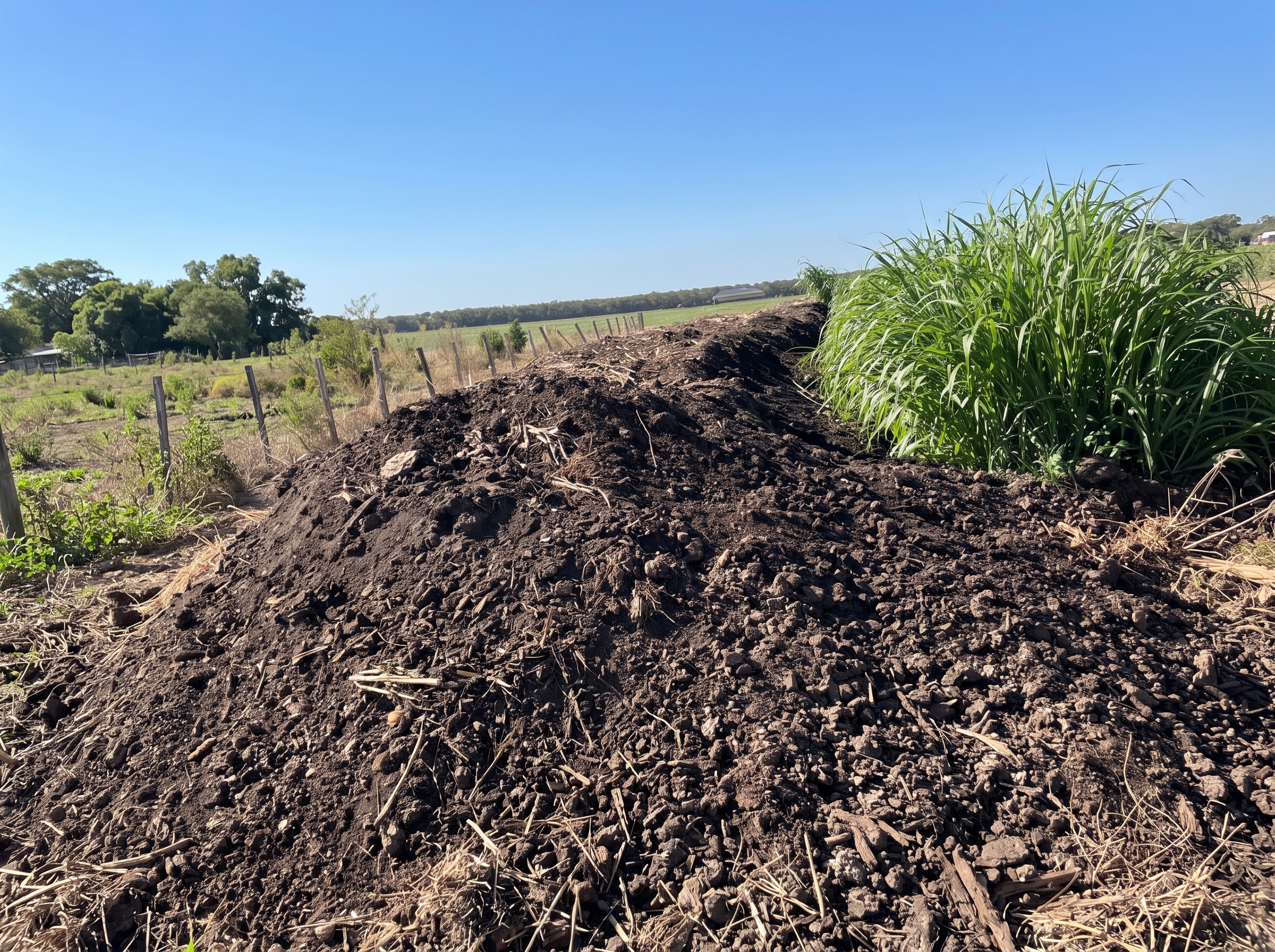
After an initial 12-month windrow cure, red wiggler worms live beneath cover crops and keep digesting the biomass, producing natural plant hormones — auxins, cytokinins and gibberellins — that drive vigorous root growth.
All of the wood and green waste Davis Ag uses qualifies as landfill-diverted material — kept out of anaerobic landfills, where it would release methane, and turned into durable, carbon-rich soil.
Years on the forest floor, before day one.
"On my organic produce farm I have been testing the Davis Ag Terra Preta Moderno Soil Amendment for a few years now."
"I don't use any other fertilizer and my produce grows abundantly."
Tested for a few years on an organic produce farm, compared with other products and with the good-quality native clay soil the region is known for.
Seeds germinate better and faster. The seedlings grow faster and healthier and have better root development.Happy Bagri, Bagri Produce
The plants produce more food with noticeable quality improvement (taste, texture and color). The soil additive has made my land noticeably softer, richer, and more fertile as well as controlling the irrigation water better. I don't use any other fertilizer and my produce grows abundantly.Happy Bagri, Bagri Produce
Terra Preta grown produce sells out and leaves behind produce that wasn't grown in it. This produce has won the favor of picky eaters who do not usually like vegetables, especially children. Even the melons are better.Happy Bagri, Bagri Produce
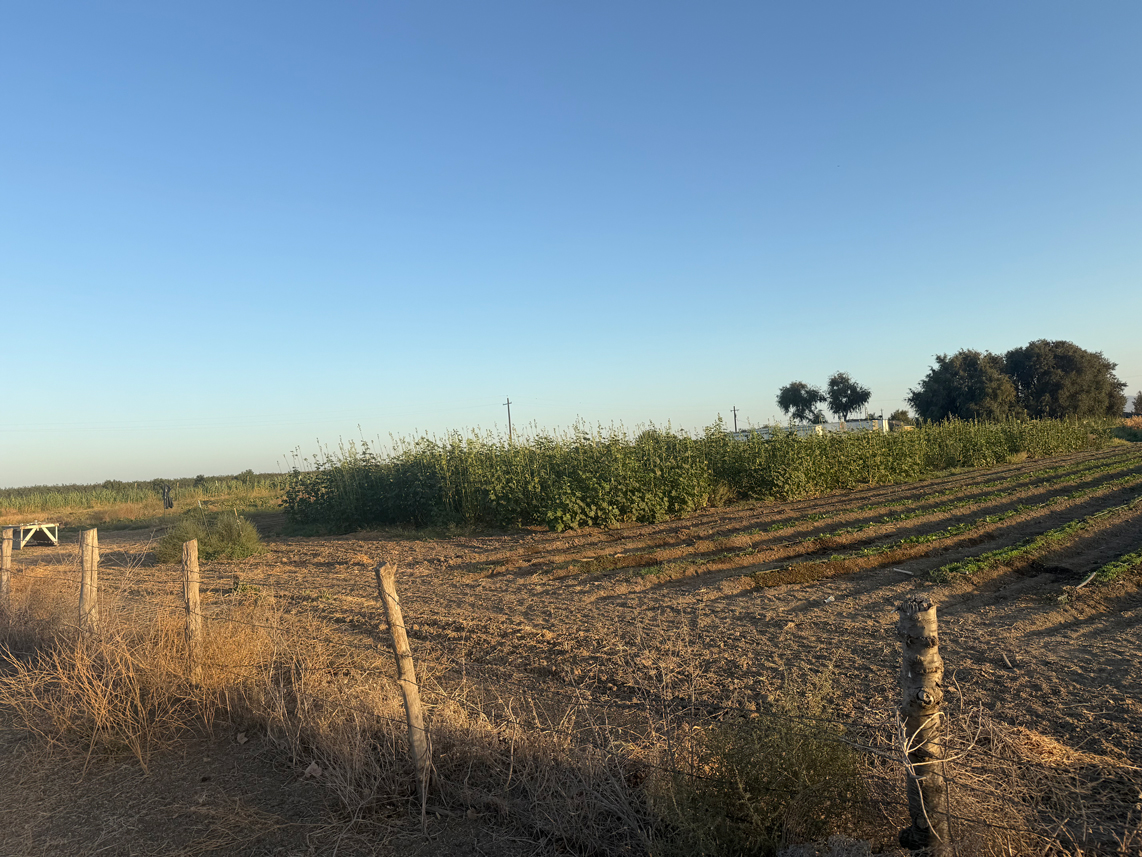
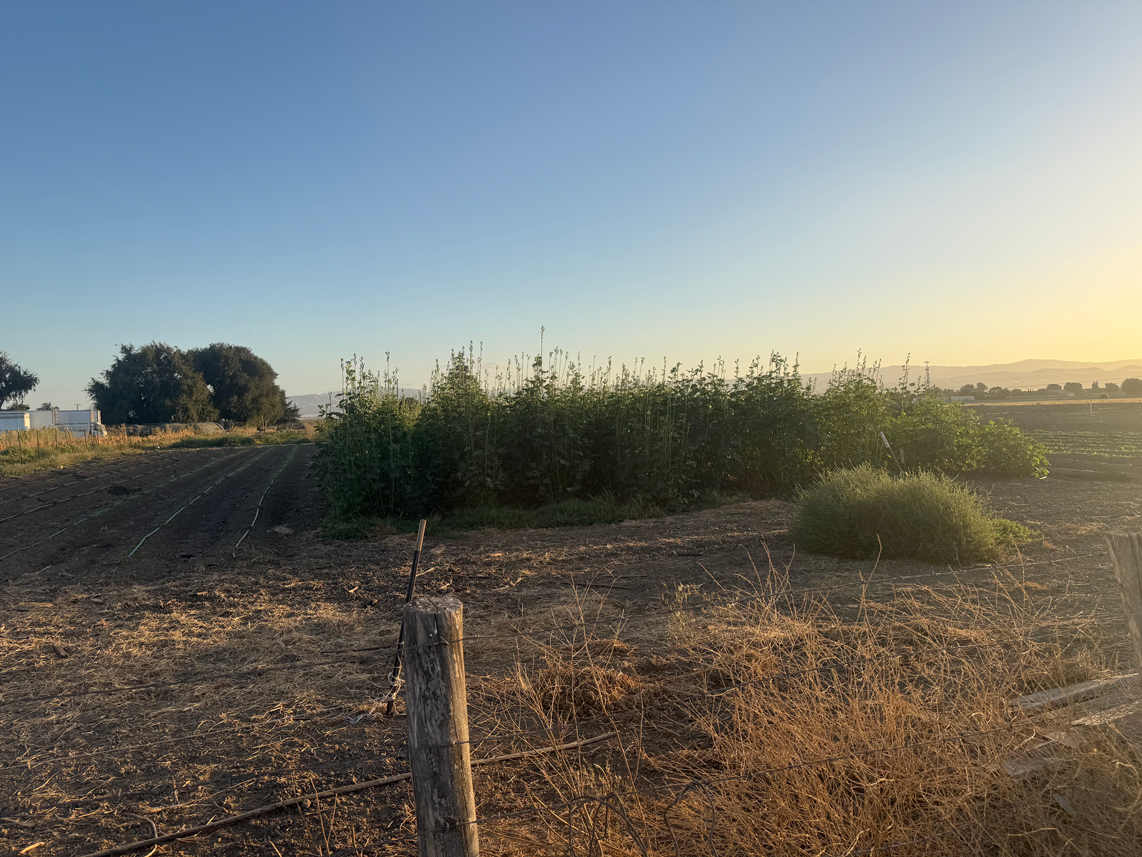
From Jack Davis's field notes, October 2026: okra in a neighboring field, where some plants were grown with Davis Ag Terra Preta and others without it.
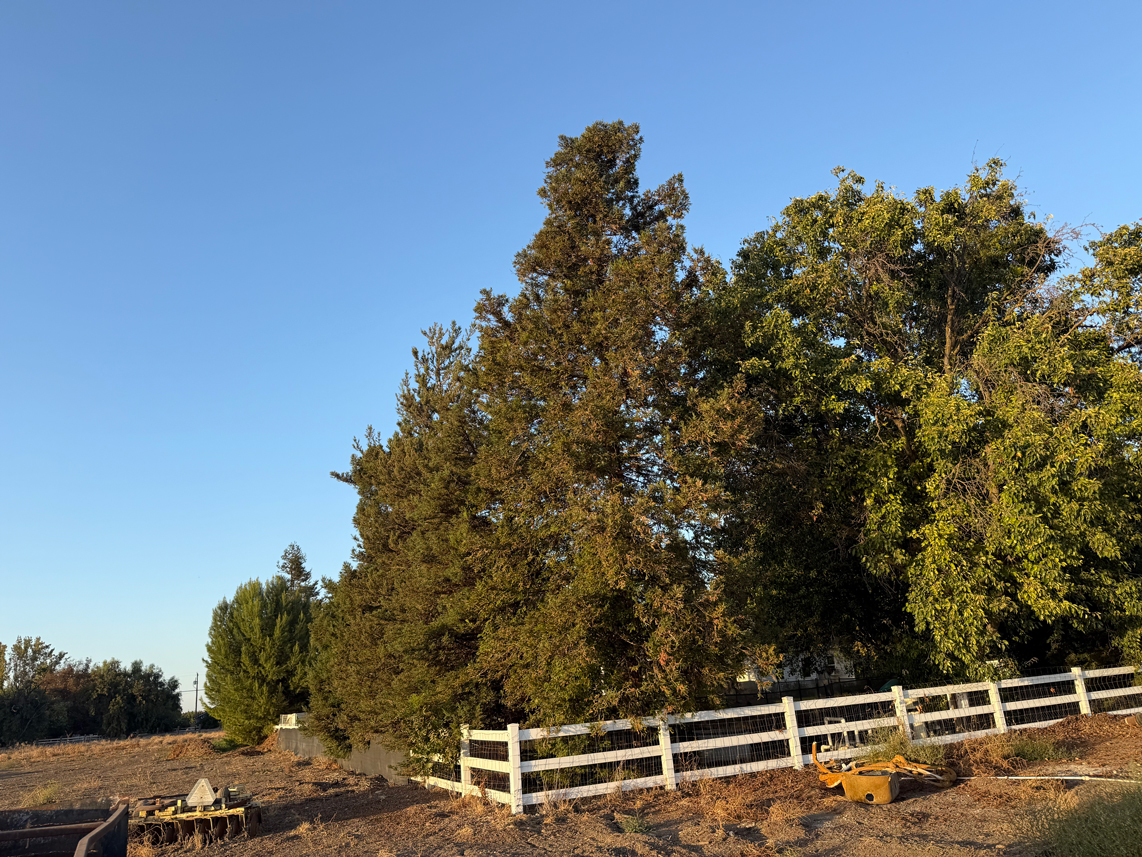
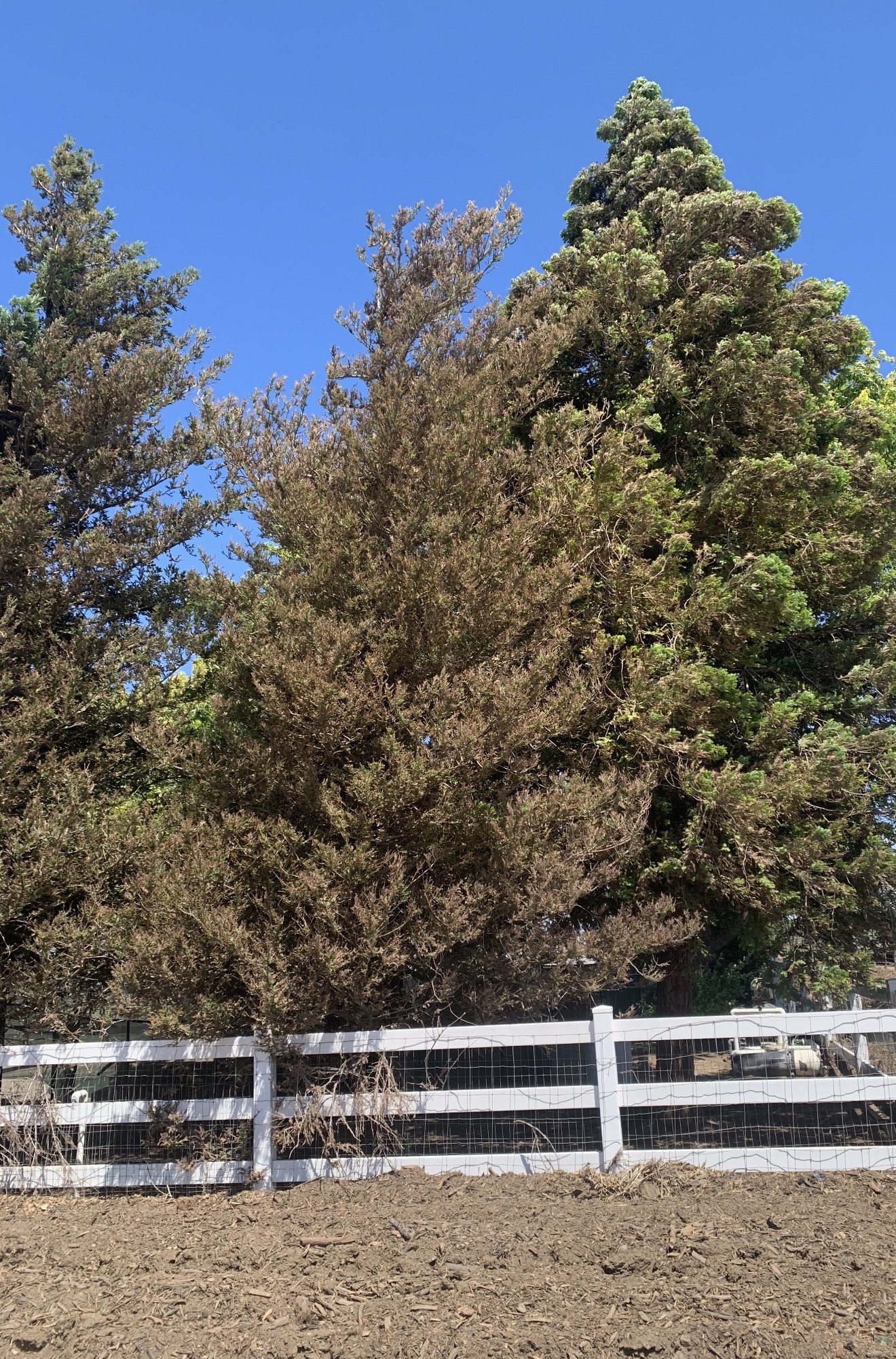
A row of redwoods with heavy browning through their foliage was treated with Jack's root-zone method, then photographed over the following months.
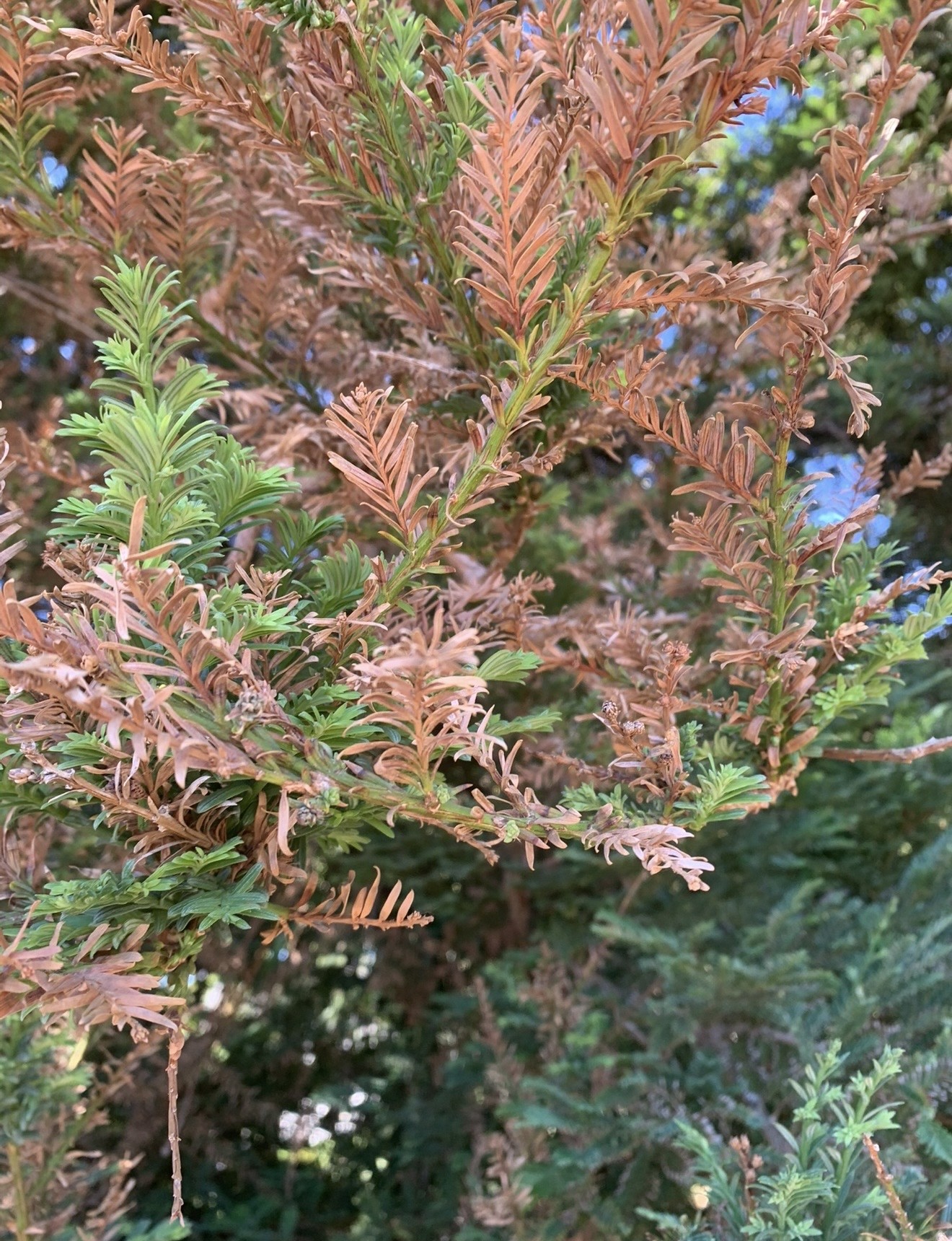
Photos taken two and three months after treatment show fresh green growth emerging among the browned foliage.
No shortcuts, no accelerants. Each batch moves through four stages, and only the second year belongs to the worms.
Collecting aged forest humus from land-clearing projects, rotted and waste wood, farm biomass, manure, green waste and food scraps rich in sugar, calcium, protein and nitrogen. All of the wood and green waste qualifies as landfill-diverted material.
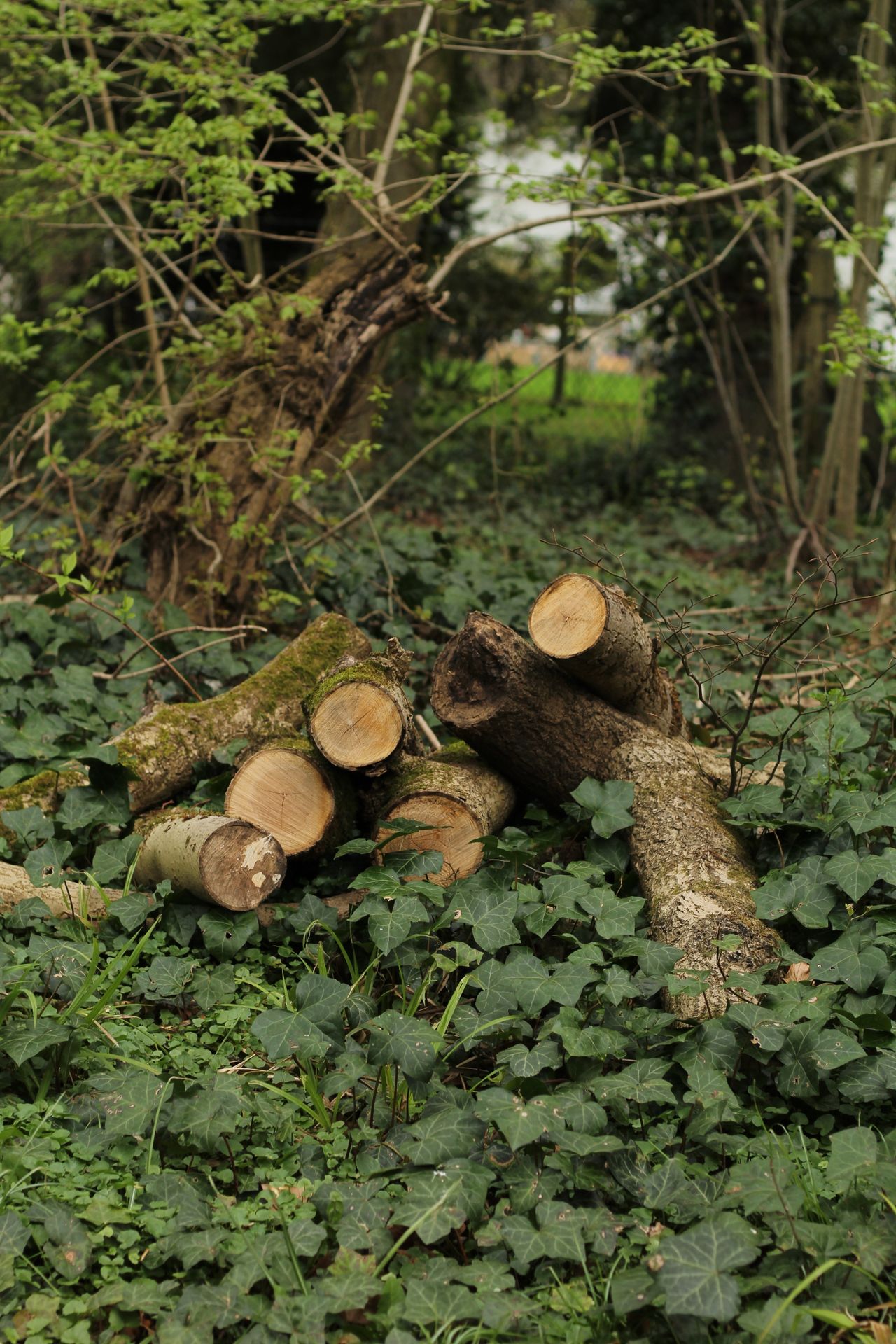
Windrow conditioning where native white-rot fungi and thermophilic bacteria break down tough lignin while preserving the soil's microscopic biodiversity.
Red wiggler colonies are introduced beneath living cover crops that hold temperature and moisture steady, while the worms break the humus into fine micro-aggregates. In Jack's current worm beds, Sudan grass, pinto beans and alfalfa grow as cover — "established in phases on the worm bedding," as he puts it — and the alfalfa reached 12 inches two months after planting.
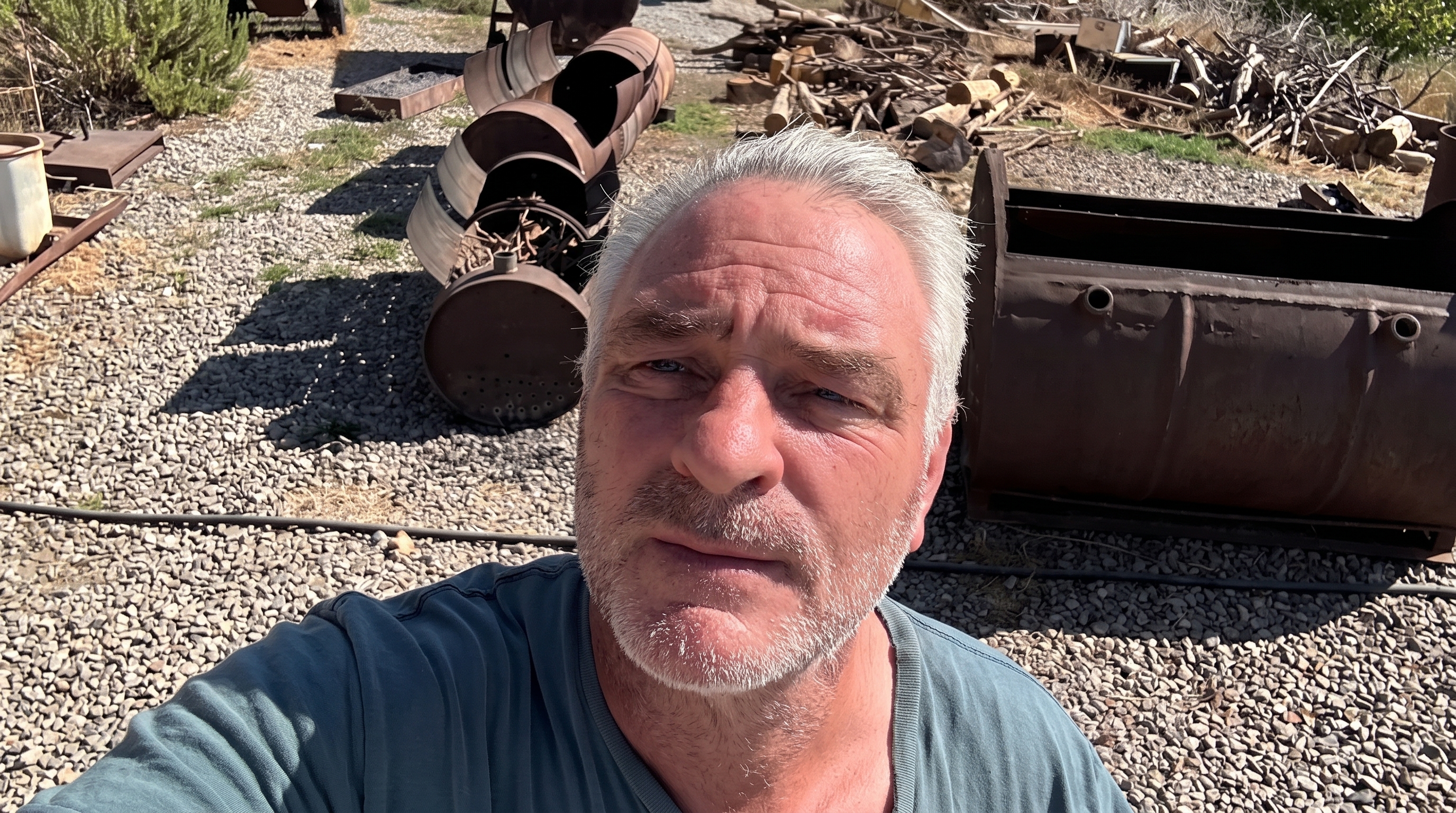
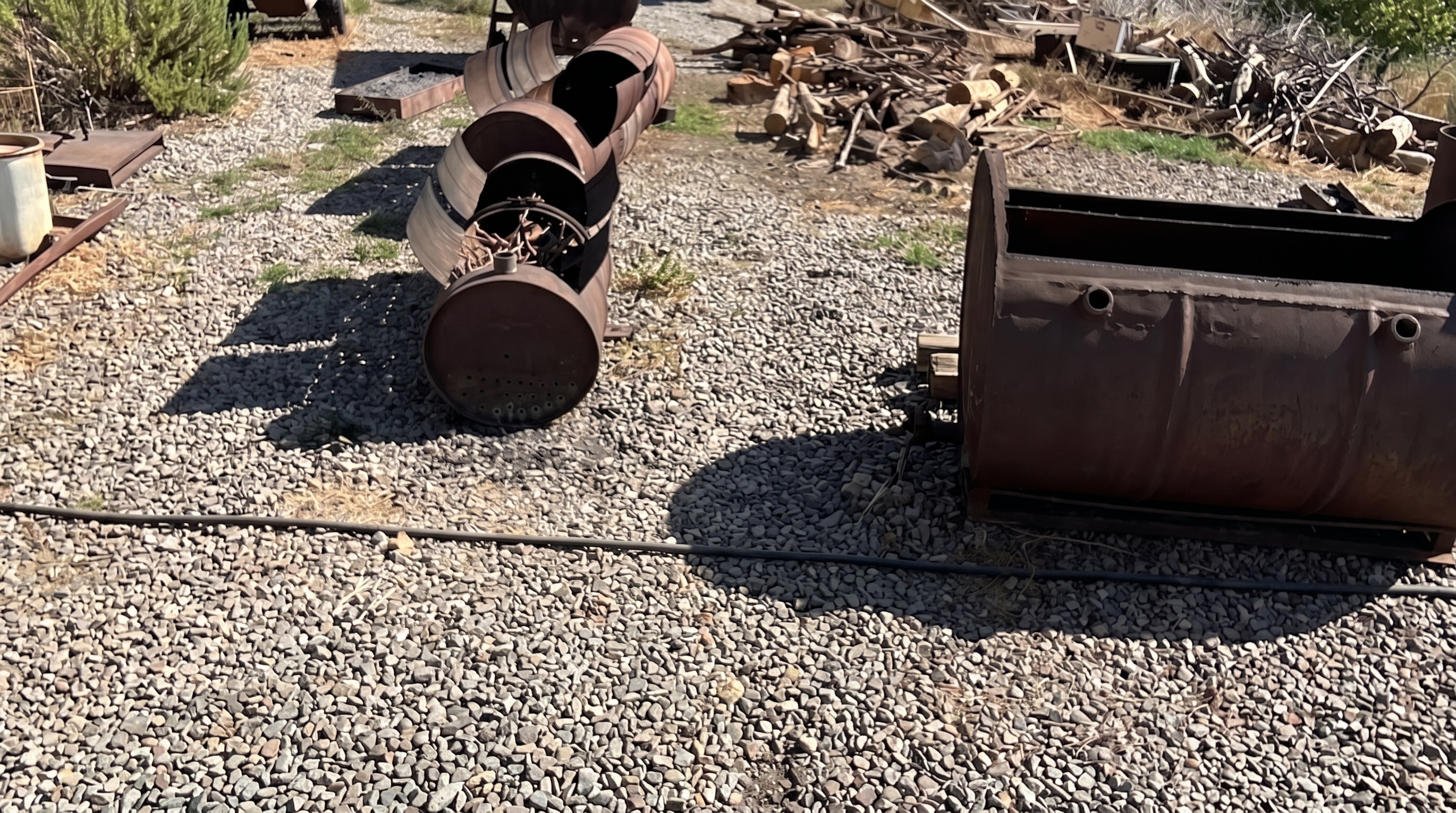
The result is dark, crumbly and sweet-smelling — ready to revitalize vineyards, nurseries and organic farm plots.
Terra Preta de Índio — "Indian black earth" — is the dark, fertile soil pre-Columbian communities built up across the Amazon basin. Centuries later it is still more fertile than the land around it, and researchers have traced that staying power to one ingredient: charcoal, working together with living biology.
Original Terra Preta soils contain up to 70 times more black carbon than surrounding soils (Glaser et al., 2001).
Biochar's aromatic structure resists microbial breakdown, so the carbon it holds can stay in the soil for centuries.
Turning wood into biochar retains roughly half of its carbon; left to rot or burn, nearly all of it returns to the air as CO₂.
Large meta-analyses show that biochar by itself gives little yield benefit in temperate, already-fertile soils like California's. Charcoal is a home for life — not the life itself.
That's why Davis Ag Terra Preta is more than char. Its biochar is charged inside a living matrix of aged forest humus, manure, green waste and a full year of earthworm digestion, so it arrives in your field already colonized by beneficial fungi and bacteria. And every ton of food and wood waste we compost properly is a ton kept out of landfills, where it would otherwise release methane.
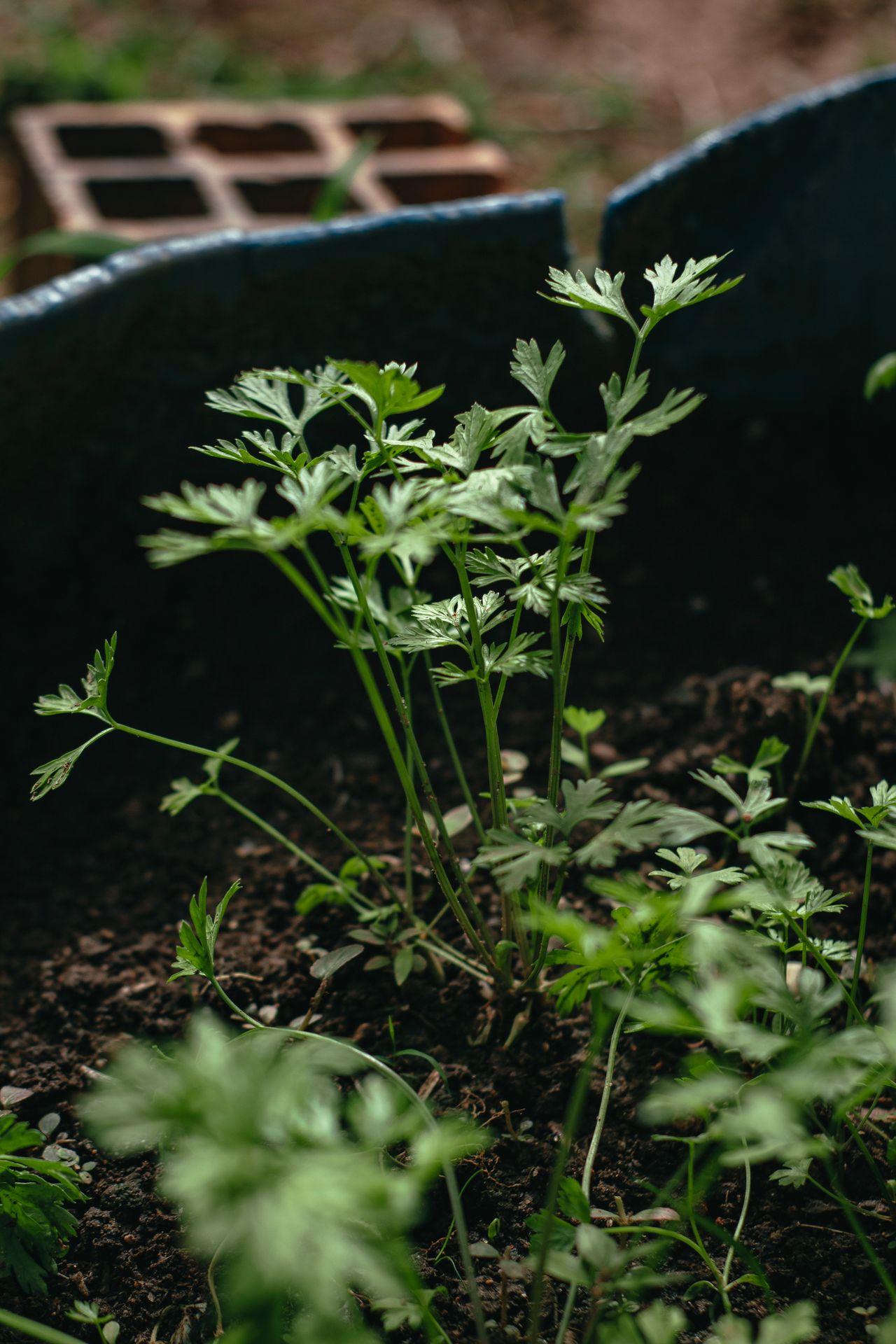
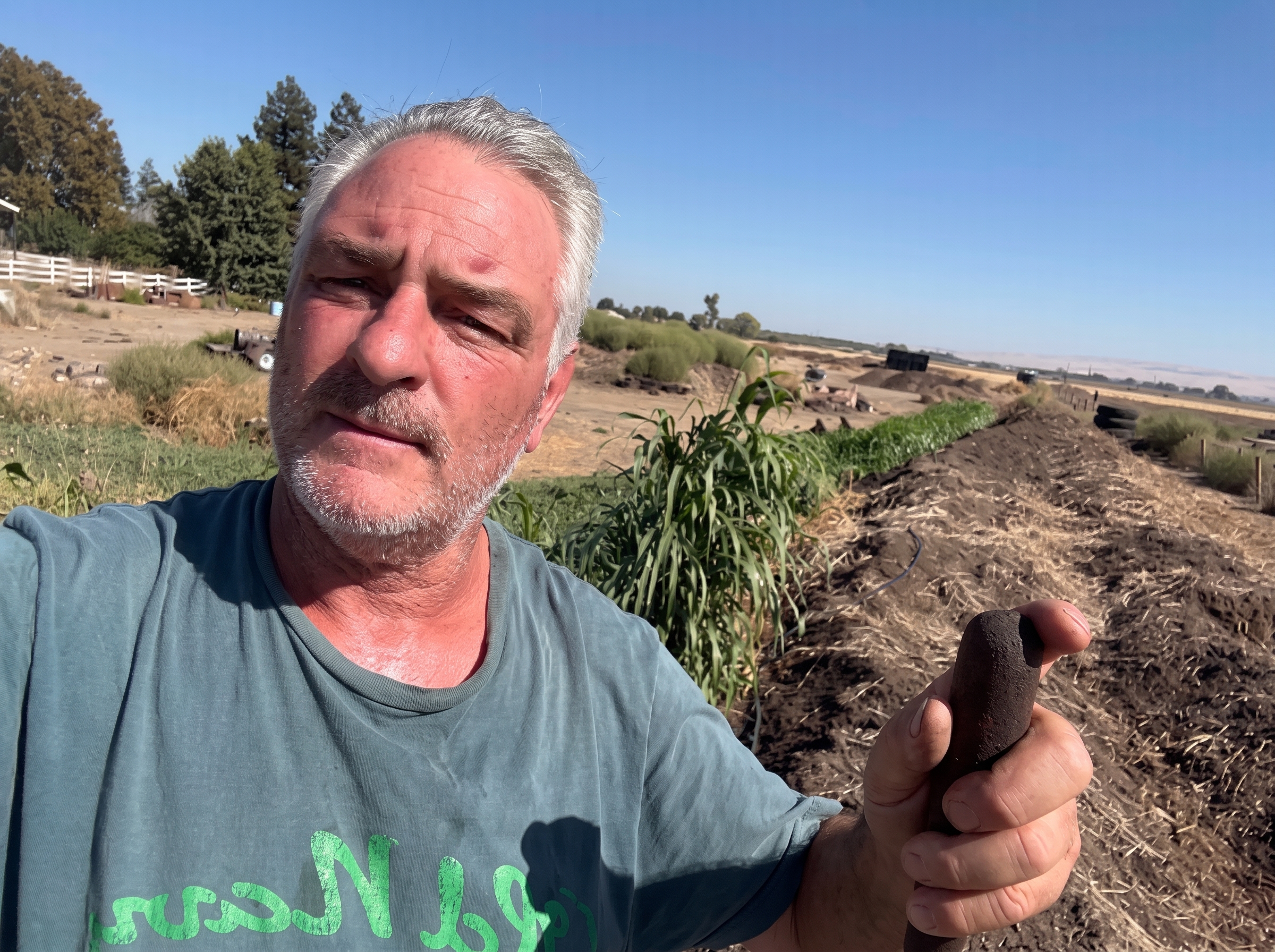
"I have had the wonderful opportunity of working on farms in the San Joaquin Valley since I was a young teen. From caring for crops and orchards I became an arborist, and kept studying soil science and how it applies to agriculture."
"Over the years I saw an abundance of biomass waste in every part of crop production and tree maintenance. That led to a fertilizer program that blends biochar with aged wood humus to create a carbon-rich worm bedding — a perfect host environment for beneficial fungi and bacteria."
Davis Ag Terra Preta will also be released in 2 lb and 5 lb retail bags, for home gardens and for mixing into planting soil. Part of the limited 2027 release, coming to Amazon and Walmart.
Notify me when bags launchNeed bulk quantities for a farm, vineyard or nursery? Request a grower allocation.
Illustration. Final packaging may differ.
Because our biological process needs two full years of active curing, production is strictly limited. In 2027 it will be released two ways: bulk allocations for growers and commercial partners, and 2 lb and 5 lb bags for home gardens.
Thank you. We'll follow up about the 2027 release.